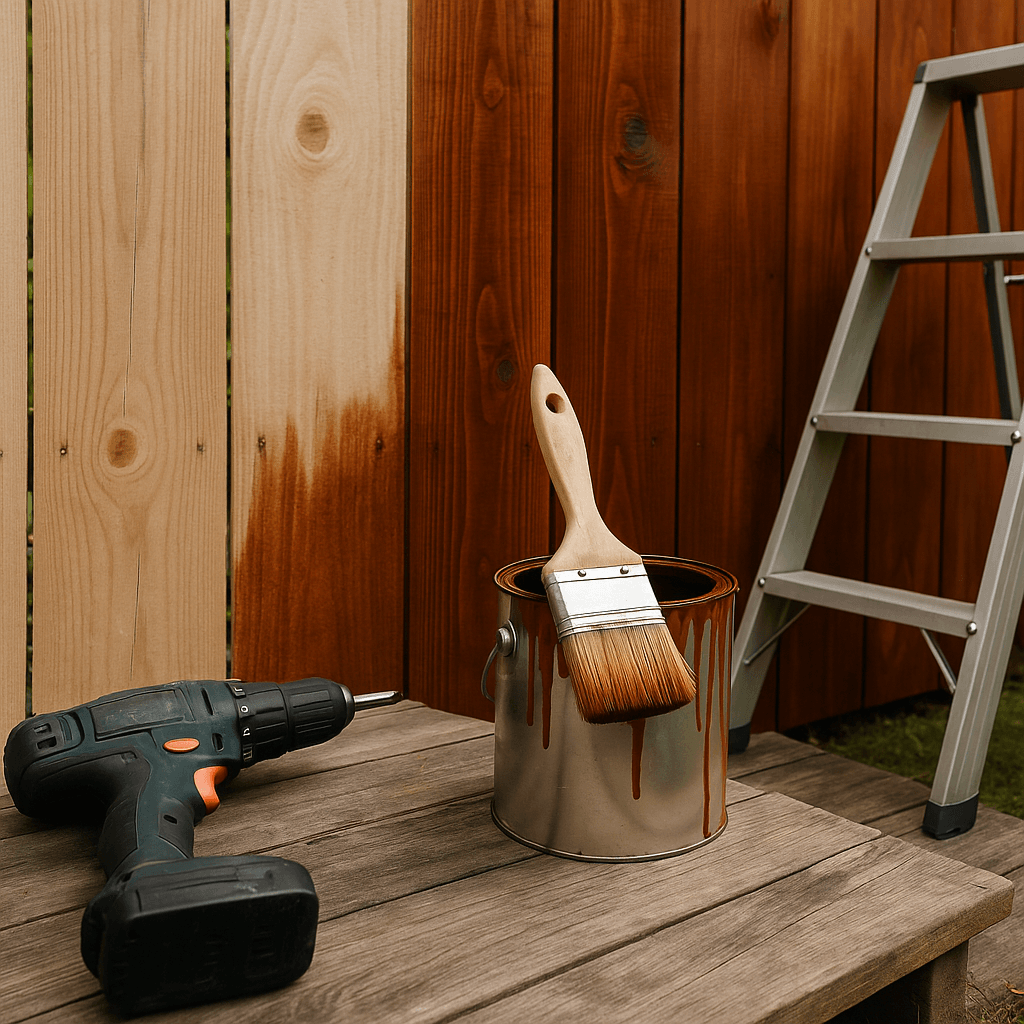
Look at that fence in your backyard; it probably looked golden and crisp when it was first installed, but the Savannah sun and humidity have likely turned it that familiar, tired shade of gray by now. It happens to the best of us, and honestly, getting it fixed shouldn’t be a headache. You know you need to protect that investment, but finding someone trustworthy to handle the staining process is a whole other challenge.
Why Savannah Weather Makes This Tricky
Here’s the thing about living in the Lowcountry: our weather is charming for us, but it is absolute brutal warfare on wood. We aren’t just talking about rain. We are talking about that thick, heavy air that hangs around from May to October. If you hire someone who treats a fence in Savannah the same way they’d treat a fence in Arizona, you’re going to be peeling flakes of stain off your cedar planks within six months.
Local knowledge matters. A handyman needs to understand moisture content. You can’t just slap paint or stain on wood that’s been soaked by a morning thunderstorm. The wood needs to breathe, and it needs to be dry.
There’s also the issue of mold and mildew. Because of our humidity, green algae loves to creep up the shady side of fences. If a handyman just stains over that without killing the spores first, you’re basically sealing the rot inside the wood. It’s like putting a band-aid on a splinter without pulling the wood out first—it’s just going to get worse underneath.
The Difference Between a “Guy with a Brush” and a Pro
We all know a guy who says he can do it cheaper. And maybe he can. But usually, “cheaper” means skipping the prep work. In the world of fence staining, prep is about 80% of the job. The actual spraying or brushing? That’s the victory lap.
When you are interviewing a handyman, listen to how they talk about the cleaning process. If they don’t mention pressure washing or using a wood cleaner/brightener, that is a massive red flag.
Wood turns gray because of UV damage—dead wood fibers sitting on the surface. If you stain over gray wood, the stain has nothing to hold onto except dead fibers. It will fall off. A quality handyman knows they have to wash that gray layer off to expose the fresh, raw wood underneath.
Key Questions to Ask
You don’t need to be an expert to hire one, but you should know enough to spot a bluff. Try asking these casually:
- “How long do you wait between washing the fence and staining it?” (Answer should be 24-48 hours depending on weather).
- “Do you protect the grass or my neighbor’s car?” (Overspray is real, and it is a nightmare to remove).
- “What kind of stain do you prefer for this climate?”
Oil-Based vs. Water-Based: The Great Debate
This is where things get a little technical, but bear with me because it affects your wallet. You’ll hear terms like “acrylic,” “solid body,” or “penetrating oil.”
Honestly, for most fences in our area, a semi-transparent oil-based stain is often the gold standard. Why? Because oil penetrates. It soaks into the wood grain and repels water from the inside out. It doesn’t sit on top like a plastic film. When oil-based stain fades, it fades gracefully.
Water-based stains (often called acrylics) sit on top. They look great day one. But when they fail, they tend to peel and crack. Once a fence starts peeling, you can’t just stain over it again. You have to strip the old stuff off, which is labor-intensive and expensive.
However, a good handyman might suggest a solid water-based stain if your fence is very old or damaged, as it offers better coverage—kind of like paint.
| Feature | Oil-Based Stain | Water-Based (Acrylic) Stain |
|---|---|---|
| Application | Soaks into the wood pores | Forms a film on top |
| Maintenance | Fades; can be re-coated easily | Peels; requires stripping/sanding |
| Best For | New or good condition wood | Older, weathered wood |
| Savannah Suitability | Excellent (repels moisture) | Good (UV protection) |
The Importance of the “Upsell” (Wait, Hear Me Out)
Usually, we hate being upsold. But when it comes to home maintenance, sometimes a handyman suggesting extra work is actually a sign of competence.
For instance, if you are getting your fence stained, a good handyman might point out that your deck is looking a little rough, too. Since they already have the pressure washer out and the spray rig set up, doing both at once is usually cheaper than doing them separately.
Or, they might notice that a few of your fence pickets are warped or the nails are popping out. A painter might just spray over a loose board. A true Savannah Handyman will offer to screw that board back in or replace the picket before staining. You want the person who cares about the structure, not just the color.
Watching Out for the “Invisible” Handyman
Here is a nightmare scenario: You hire someone, they power wash the fence on Monday, and say they will be back Wednesday to stain. Wednesday comes. No show. Thursday. No show. Meanwhile, your fence is bare, unprotected, and exposed to the elements.
Reliability is the currency of the trade. How do you test for this?
Communication. It sounds simple, but pay attention to how they handle the estimate. Did they show up on time for the quote? Did they text you if they were running late? If they are flaky when they are trying to get your money, they will be even flakier once they have the deposit.
Speaking of deposits—be wary of anyone asking for full payment upfront. A deposit for materials is normal. Full payment before a drop of stain hits the wood? Keep looking.
Does Insurance Really Matter for a Fence?
You might think, “It’s just a fence. What’s the worst that can happen? They paint the grass?”
Well, yes, painting the grass is bad. But overspray is the real enemy. On a windy Savannah afternoon, a fine mist of wood stain can travel surprisingly far. If that stain lands on your neighbor’s white siding, or their brand-new truck, who pays for it?
If your handyman isn’t insured, you might be the one paying for it.
Always ask for proof of liability insurance. It’s not about being mistrusting; it’s about protecting your home. A professional won’t get offended; they will probably be happy you asked because it separates them from the amateurs.
What About the Cost?
Let’s talk money. We all want a deal. But in this industry, the lowest bid is often the lowest bid for a reason.
If a quote seems too good to be true, look at the materials line item. Are they using a high-quality stain like Ready Seal or Wood Defender? Or are they buying the cheapest bucket they can find at the big-box store?
Cheap stain is mostly solvents and water with a little bit of pigment. It looks good for about three months. Quality stain has better pigments (which block UV rays) and better oils (which stop rot). You are better off paying a little more now for a job that lasts three or four years, rather than paying less for a job you have to redo next summer.
Also, consider the application method. Spraying is faster (and cheaper on labor), but it needs to be “back-brushed.” That means after spraying, the handyman uses a brush to push the stain into the wood fibers. If they just spray and walk away, the stain sits on the surface and looks uneven. Back-brushing takes time, so it costs more, but the finish is superior.
The “Green” Factor
We love our gardens here. Azaleas, hydrangeas, that vegetable patch you’ve been working on—they don’t like chemical strippers or oil stains.
A conscientious handyman will take the time to water down your plants before and after the job. Why? Because if the plants are already saturated with water, they won’t drink up the stray chemicals. They should also use tarps. If a handyman rolls up without drop cloths or plastic sheeting, you should probably be worried about your landscaping.
Trust Your Gut
At the end of the process, you are hiring a person, not just a service. You want someone you feel comfortable having in your backyard. Someone who treats your property with respect.
If you get a bad vibe, or if they seem rushy and dismissive of your questions, it’s okay to say no. This is your home. The fence is the frame around your personal sanctuary. You want it to look good, stand strong, and increase your curb appeal.
Finding the right person takes a little bit of vetting, but the result—a rich, beautiful fence that withstands the Georgia heat—is absolutely worth it.
Ready to Transform Your Fence?
If your fence is looking a little worse for wear, or if you just want to protect a new installation from the elements, we are here to help. We understand the local climate, we know wood, and we treat every yard like it’s our own. No cutting corners, just honest work and beautiful results.
Give us a call or drop us a line. Let’s get that fence looking brand new again.