Let’s be honest: there is nothing quite as frustrating as staring at a gap in your baseboards or a moldy line around your bathtub that just won’t scrub clean. You grab a caulking gun thinking it’s going to be a quick five-minute fix, but half an hour later, you’ve got sticky goop in your hair, on your shirt, and somehow, the gap looks worse than when you started. It’s one of those home maintenance tasks that looks deceptively simple but requires a surprising amount of finesse to get right.
Why Good Caulking Matters in Savannah
You might think caulking is just about making things look pretty. And sure, a crisp, white line of caulk makes a room pop—it’s like the eyeliner of home improvement. But living down here in Savannah, proper sealing is about way more than aesthetics. It’s about survival for your home.
Here’s the thing: our humidity is relentless. When warm, wet air finds its way into the cracks around your windows or the joints of your siding, it doesn’t just sit there. It invites mold, rot, and structural damage. Plus, let’s not forget the bugs. Palmetto bugs can squeeze through gaps you wouldn’t believe. A solid caulking job is your first line of defense against the elements and the critters that want to move in with you.
The Toolkit: Stop Buying the Cheapest Gun
If you take only one thing away from this, let it be this: throw away that flimsy, three-dollar metal skeleton gun you bought at the checkout counter. It’s ruining your work.
Those cheap guns rely entirely on your hand pressure to stop the flow, and they don’t have a release trigger that actually works fast enough. You squeeze, the caulk comes out, you stop squeezing, and… the caulk keeps coming out. It’s a nightmare.
What you actually need:
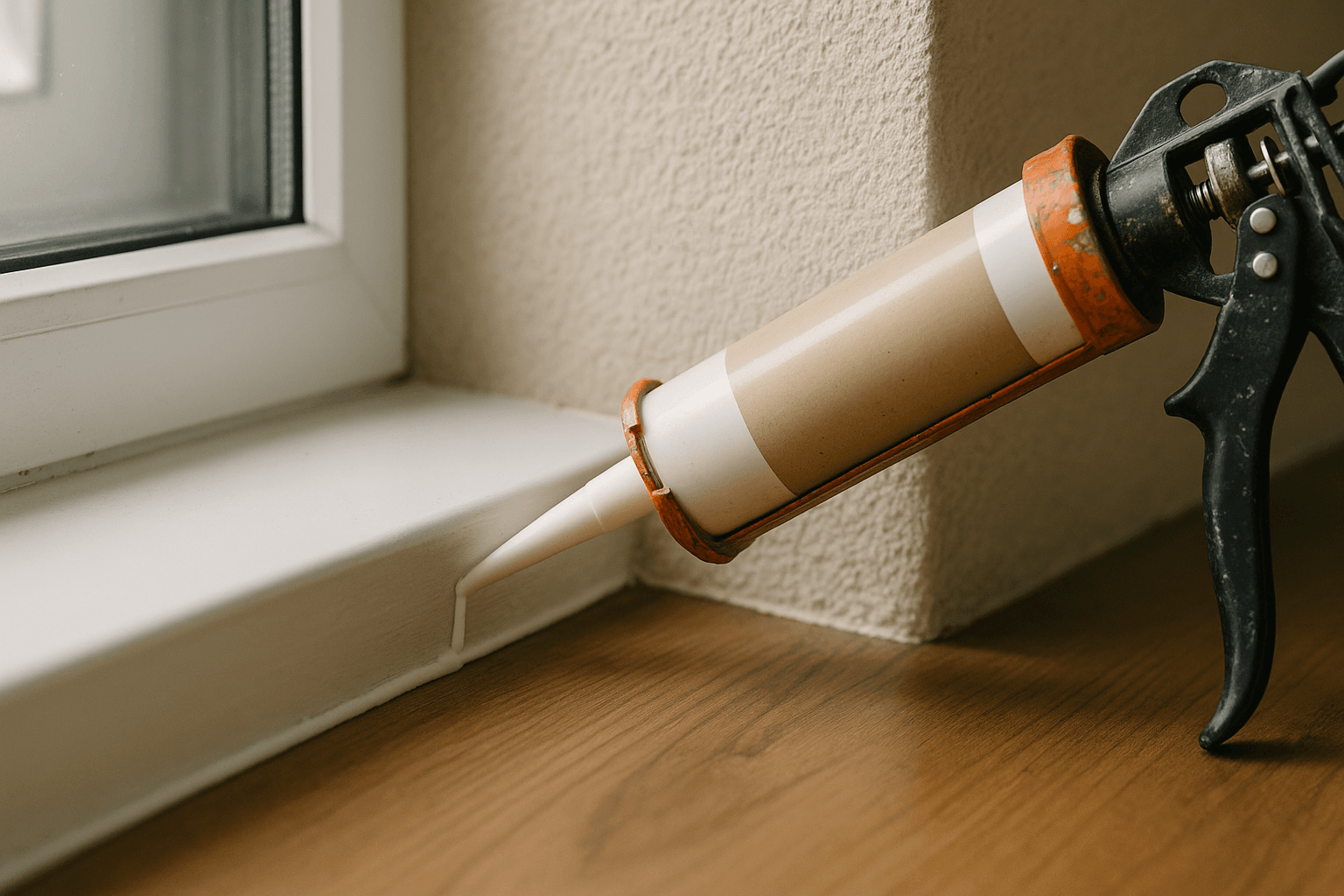
- A dripless caulking gun: These have a mechanism that instantly releases pressure when you let go of the trigger. It saves you from a massive mess.
- The right caulk for the job: Not all tubes are created equal.
- A caulk finishing tool: Yes, pros use their fingers sometimes, but a silicone finishing tool gives you that factory-perfect edge.
- Rags (lots of them): You can never have too many.
- Painter’s tape: If you aren’t confident in your steady hand yet, tape is your best friend.
Choosing Your Weapon: Silicone vs. Latex vs. Hybrid
Walk down the aisle at the hardware store, and it’s easy to get overwhelmed. There are fifty different tubes claiming to be the “best.” How do you choose? It really comes down to where you are working and what you need the caulk to do.
| Type | Best Used For | Paintable? | Pros/Cons |
|---|---|---|---|
| Acrylic Latex | Baseboards, trim, molding, interior dry areas. | Yes | Easy to clean up with water. Not great for wet areas. Shrinks a little. |
| 100% Silicone | Showers, tubs, sinks, exterior glass. | No | Waterproof and flexible. Very messy to clean up (needs mineral spirits). |
| Siliconized Latex | Windows, doors, exterior siding. | Yes | A hybrid. Better weather resistance than basic latex but easier to use than pure silicone. |
For most interior trim work in Savannah homes—like those gaps where the crown molding meets the ceiling—acrylic latex is the way to go because you’re going to want to paint over it eventually. But for that bathtub? Don’t even think about it. Stick to 100% silicone with mold inhibitors.
The Preparation: The Part Everyone Skips
You know what? This is where 90% of DIY jobs fail. You get excited to apply the new fresh white bead, so you just squeeze it right over the old, cracking, yellowed stuff.
Please don’t do that.
New caulk does not stick well to old caulk. It just doesn’t. It’s like trying to put a sticker on a dusty table; it might stay for a minute, but it’ll peel right off. You have to remove the old stuff first.
- Scrape it out: Use a utility knife, a 5-in-1 tool, or a specialized caulk removal hook. Get aggressive with it. You need to see the raw material underneath.
- Clean the surface: Once the bulk is gone, there’s usually a thin film left behind. If it’s silicone, use mineral spirits. If it’s latex, soap and water usually work, but sometimes you need a little alcohol to cut the grease.
- Let it dry: Seriously. If you trap moisture behind your new caulk, you’re just farming mold.
The Technique: Pull, Don’t Push
Okay, you’re prepped. You’ve got your dripless gun. You’ve cut the tip of the tube (at a 45-degree angle, about the size of the gap you’re filling—not too big!). Now, how do you actually apply it?
Most people instinctively try to push the caulk into the gap, moving the gun forward. This usually results in a bumpy, uneven mess because the tip plows through the bead you just laid down.
Instead, pull the gun. Start in the corner, squeeze the trigger with steady pressure, and drag the gun backward away from the bead. You want the caulk to flow out just slightly faster than you are moving your hand. It’s a rhythm thing. Once you find the groove, it’s actually kind of satisfying.
The “Finger” Method vs. Tools
Generations of handymen have used a wet finger (water for latex, saliva or mineral spirits for silicone) to smooth out the bead. It works. But it also pushes caulk into the ridges of your fingerprints, and it creates a concave shape that can sometimes pull away from the edges as it dries.
Using a smoothing tool or a plastic card with a rounded corner presses the material firmly into the gap while scraping away the excess. It leaves a flat, clean profile that looks professional. Plus, it keeps the chemicals off your skin.
The Savannah Factor: Dealing with “Old House” Movement
If you live in one of our beautiful historic homes—or even a new build that’s settling on our sandy soil—you know that houses here move. They breathe. Wood expands in the humid summer and contracts in the drier winter months.
This expansion and contraction is why cheap, hard caulk cracks within a year.
When we are working on homes in Savannah, we look for elastomeric products or high-flexibility sealants. These products stretch like a rubber band. So when your door frame shifts a fraction of an inch in July, the caulk stretches with it instead of snapping. It costs a few dollars more per tube, but it saves you from having to redo the job every spring.
Common Mistakes (And How to Fix Them)
Even with the best intentions, things go wrong. Here are a few “oops” moments we see all the time:
- Cutting the hole too big: You can always cut more off the tip, but you can’t put it back. Start small. A hole the size of a pinhead is too small, but a hole the size of a dime is a disaster waiting to happen. Aim for roughly 1/8th of an inch.
- Ignoring the expiration date: Yes, caulk expires. If you found a tube in the back of your garage from 2018, throw it out. It won’t cure properly, and you’ll be left with a sticky mess that never dries.
- Stopping and starting: Try to do one long, continuous line. Every time you stop and restart, you create a lump that you’ll have to smooth out later.
When to Call in the Cavalry
Look, re-caulking a backsplash or filling a few nail holes is a great Saturday morning project. But there are times when it’s better to bring in a professional.
If you are dealing with exterior second-story windows, extensive rot that needs to be dug out before sealing, or large-scale waterproofing in a bathroom where a leak could cause thousands in damage, the stakes are higher.
At Savannah Handyman, we treat caulking as an art form. We know exactly which compounds withstand the Georgia sun and which ones fight off the mildew in your shower. We handle the messy removal, the meticulous prep, and the flawless application so you don’t have to worry about whether your home is sealed tight.
Get Your Home Sealed Right
Whether you need to freshen up your bathroom, seal drafty windows before the AC bills spike, or just get your baseboards looking sharp for a fresh coat of paint, we’ve got you covered. Don’t let a $10 tube of caulk turn into a weekend of frustration.