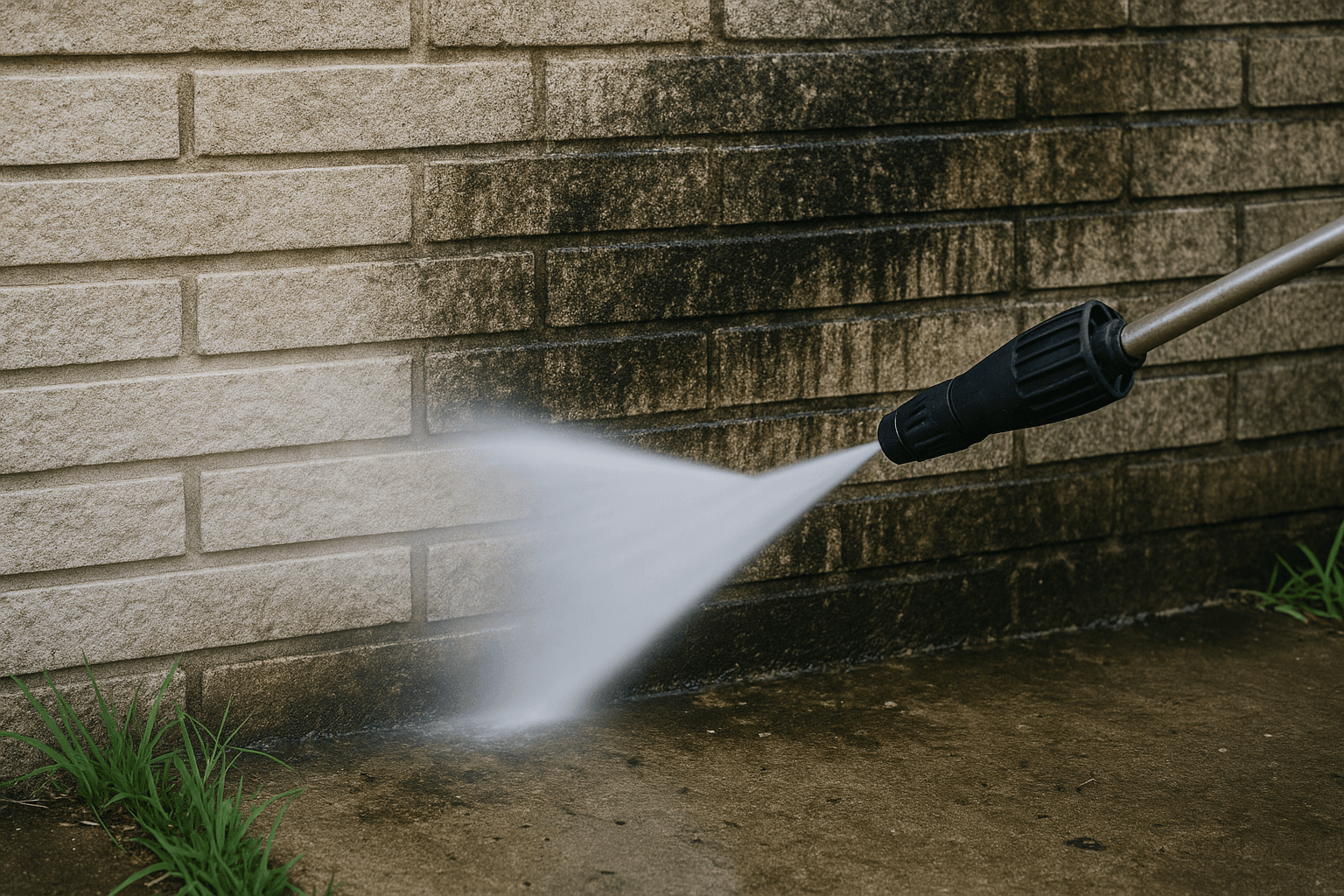
Living in Savannah means dealing with a level of humidity that feels like a warm, wet blanket draped over your house, and while that’s great for the Spanish moss, it’s absolute paradise for algae and mildew. You walk outside one morning to grab the paper, look back at your siding, and realize your once-pristine white home is starting to look a little… green. It happens to the best of us, and honestly, getting out there with a power washer can be one of the most satisfying ways to spend a Saturday—if you know what you’re doing.
Wait, Is It Power Washing or Pressure Washing?
You hear these terms thrown around interchangeably all the time. You might even hear us switch between them when we’re chatting at the hardware store. But technically, there is a subtle difference, and it comes down to one thing: heat.
Pressure washing uses normal temperature water blasted at high velocity. It’s purely the mechanical force of the water spray doing the work. This is what you get with most electric machines you rent or buy at the big box stores. It’s fantastic for knocking loose dirt, mud, and that inevitable layer of yellow pollen off your driveway.
Power washing, on the other hand, uses a heating element to get the water incredibly hot. We’re talking about steam cleaning on steroids. The heat helps break down organic materials—like moss, weeds, and mold—much faster than cold water. It’s better for heavy-duty grease stains on a garage floor or chewing gum on a sidewalk.
For most homeowners tackling a weekend project, standard pressure washing is what you’ll be doing. And you know what? That’s usually enough to get the job done right, provided you use the right technique.
The “More Power” Trap
There is a temptation, specifically among guys (I’m guilty of this too), to crank the machine up to the max PSI because we think it’ll clean faster. PSI stands for Pounds per Square Inch, which measures the force of the water.
Here’s the thing: more pressure isn’t always better. In fact, it can be a disaster.
If you blast vinyl siding with 3,000 PSI, you aren’t just cleaning it; you’re likely forcing water underneath the panels. That trapped water sits against the wood sheathing of your house, leading to rot and mold where you can’t see it. Even worse, high pressure can shatter old brick, etch lines into your wood deck, or strip the paint right off your trim.
Think of it like washing your hands. You don’t need scalding hot water and a wire brush to get them clean; you need soap and a little friction. The same logic applies to your house.
Choosing the Right Nozzle
Most washers come with color-coded tips. Knowing which one to grab is half the battle.
| Color | Angle | Best Use | Danger Level |
|---|---|---|---|
| Red | 0° | Concrete stains, heavy metal equipment. | High. Can cut skin and damage wood. |
| Yellow | 15° | Stripping paint, cleaning concrete. | Moderate. keep moving. |
| Green | 25° | General cleaning, walkways, decks. | Low/Medium. Most common tip. |
| White | 40° | Siding, windows, cars. | Low. Gentle rinse. |
| Black | 65° | Applying soap/detergent. | None. Low pressure only. |
The Secret Sauce: It’s All About the Chemicals
You wouldn’t wash your laundry without detergent, right? So why try to wash your house with just water?
The biggest trick professional handymen use isn’t a stronger machine; it’s a cleaning solution. We often use a method called “soft washing” for siding and roofs. This involves applying a chemical mixture at low pressure (using that black soap tip) and letting it sit for a few minutes.
The mixture usually contains water, a surfactant (soap that helps the mixture stick to the wall so it doesn’t just run off), and sodium hypochlorite—which is the fancy name for bleach.
When you let the chemicals do the heavy lifting, they kill the algae spores at the root. If you just blast the green stuff away with water, you’re giving it a haircut. It looks clean for a month, but the roots are still there, and in our Savannah climate, it’ll grow back with a vengeance before summer is over.
Safety Tip: If you use bleach or strong cleaners, always pre-soak your plants and grass with fresh water before you start, and rinse them down again after. The plants will drink the fresh water first, making them less likely to absorb the chemical runoff.
A Step-by-Step Guide to Not Ruining Your Weekend
Okay, you’ve got the machine, you’ve got the soap, and you’re ready to boost that curb appeal. Let’s walk through how to do this without ending up wet, frustrated, or with a damaged house.
1. Clear the Area
Move the patio furniture, the potted plants, and the grill. You don’t want to be tripping over the garden hose while you’re managing a high-pressure wand. Also, cover any outdoor electrical outlets. You think they are waterproof until you accidentally hit one from a weird angle.
2. The Pre-Soak
If you are using a detergent, apply it from the bottom up. I know, gravity says start at the top, but if you apply soap to dry siding starting at the top, it can run down in streaks. If the bottom is already wet with soap, the runs blend in. Let it sit for about 5 to 10 minutes. Don’t let it dry! If it starts drying, mist it with a little water.
3. The Wash
Now, switch to a rinse tip (green or white) and wash from the top down. This uses gravity to carry the dirt and grime away. Keep the wand moving. Never let it sit in one spot, or you risk making visible “stop marks” on the surface.
4. Watch Your Distance
Keep the nozzle about 6 to 12 inches away from the surface. If you have to get closer than that to remove dirt, you probably need a stronger chemical, not more pressure.
Specific Surface Tips
Concrete Driveways and Walkways
This is where you can have a little fun. Concrete is tough. You can use a higher pressure here. However, using a wand on a large driveway takes forever and usually leaves “zebra stripes”—those lines where you went slightly slower or faster.
If you have a lot of concrete to clean, consider renting a surface cleaner. It looks like a floor buffer that attaches to the pressure washer. It spins two nozzles underneath a plastic hood, cleaning a wide path evenly without the stripes. It saves hours of work.
Wood Decks
Be careful. Wood is soft. High pressure raises the grain, leaving the wood feeling fuzzy and splintery. Once that happens, you have to sand the whole thing down. Use a wide fan tip (40 degrees) and a deck cleaning solution. Go with the grain of the wood, not across it.
Vinyl Siding
We mentioned this earlier, but it bears repeating: Low pressure only. You are washing the house, not stripping paint. If you see weep holes at the bottom of the vinyl panels, try not to spray directly into them. They are there to let moisture out, not to let high-pressure water in.
When to Call in the Cavalry
Look, I’m a handyman. I love DIY. There is a sense of pride in standing back, soaked to the bone, looking at a sparkling white house. But sometimes, it’s just not worth the hassle.
If you have a two-story home, working on a ladder with a pressure washer is dangerous. The “kickback” from the wand can throw you off balance easier than you think. And honestly, dragging hoses around the yard, mixing chemicals, and trying to reach those eaves without falling… it’s a lot.
Plus, there’s the risk of damage. I’ve seen homeowners accidentally etch their brand-new pavers or blow the seals on their double-pane windows. Sometimes, what looks like dirt is actually oxidation (chalky residue on siding), and pressure washing it unevenly makes the house look like a tie-dyed shirt.
If you’d rather spend your weekend enjoying the squares downtown or heading out to Tybee, it might be time to hand the wand over to someone who does this every day.
Let’s Get Your Home Looking New
Your home is likely your biggest investment, and keeping the exterior clean isn’t just about vanity—it’s about protection. Mold and mildew eat away at paint and rot wood over time. A good wash extends the life of your siding and deck.
Whether you need a full house wash, a driveway that looks like new, or just some help getting the green off the back patio, Savannah Handyman has the tools and the know-how to handle it safely. We treat your home like our own, ensuring the right pressure and the right solutions are used for every surface.
Don’t let the grime take over. Give us a shout and let’s get that curb appeal back where it belongs.