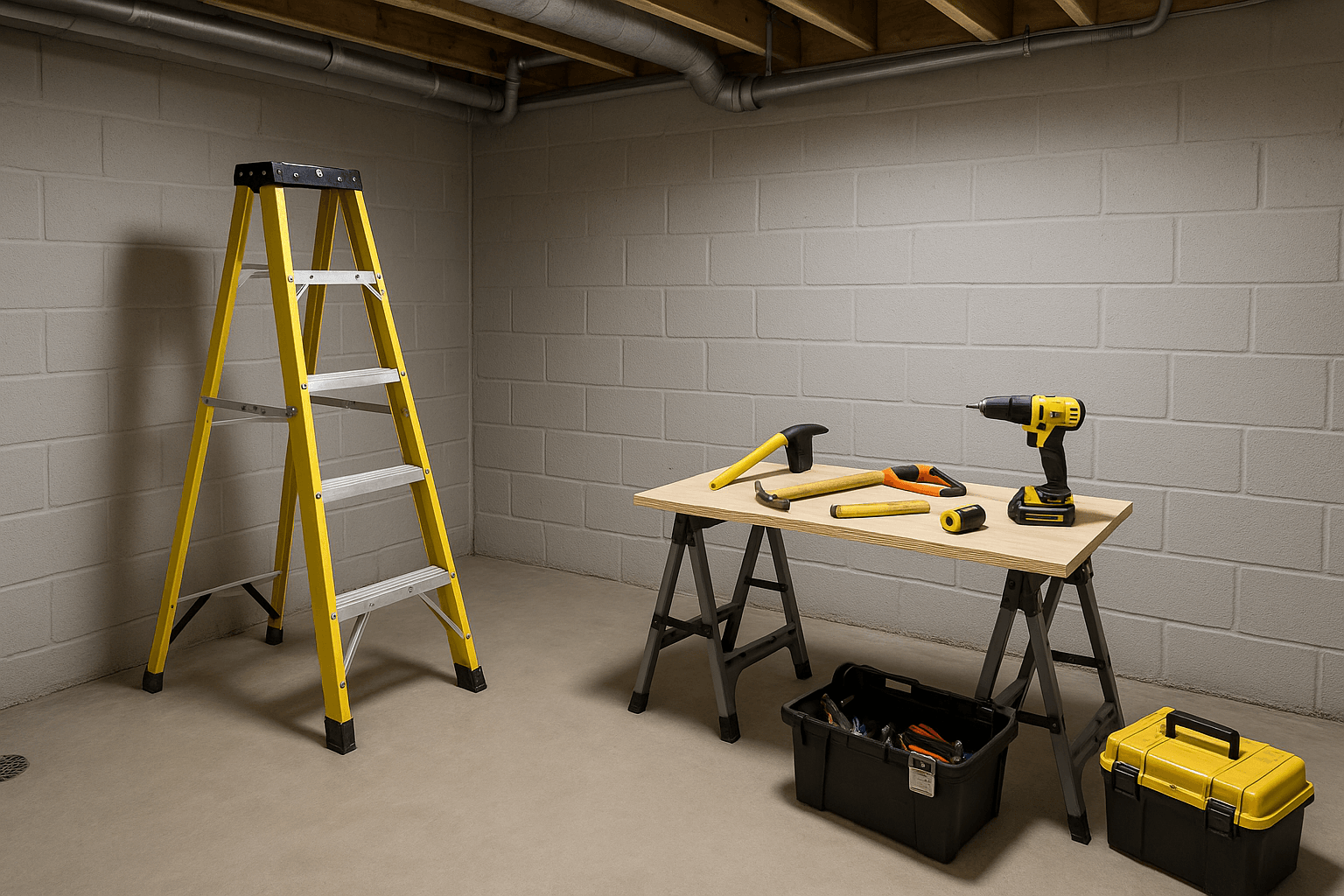
If you are one of the lucky few in Savannah to actually have a basement or a lower-level utility space, you know it’s a bit like finding a unicorn in the Lowcountry. It’s a rare asset, but let’s be real—it can quickly turn into a dark, damp headache if you don’t stay on top of it. Whether you have a historic garden level downtown or a semi-subterranean space in Ardsley Park, maximizing that square footage is smarter than letting it gather dust and cobwebs.
Contents
- 1 Let’s Talk About the Water (Because We Have To)
- 2 Getting Things Off the Floor
- 3 Lighting: Making it Look Less Like a Cave
- 4 The Floor Conundrum: What Actually Works Here?
- 5 Drywall and Repairs: Closing it In
- 6 The “Man Cave” or “She Shed” Potential
- 7 Maintenance is Cheaper than Repair
- 8 Why a Handyman and Not a General Contractor?
- 9 Let’s Get Your Basement Working for You
Let’s Talk About the Water (Because We Have To)
We can’t really have a conversation about basements in Georgia without addressing the elephant in the room: humidity. Or, more accurately, the high water table. You know what? Dealing with moisture isn’t just about comfort; it’s about protecting the structural integrity of your home. Before you even think about putting up nice drywall or a pool table, you have to ensure the envelope is sealed tight.
This is where waterproofing services come into play. It’s not the most glamorous part of home improvement, but honestly, it’s the most critical. If your lower level smells like a wet dog every time it rains, you’ve got water intrusion. A handyman can help identify where that water is coming from. Sometimes it’s as simple as extending your downspouts further away from the foundation. Other times, you need to seal cracks in the masonry.
For those situations where water just wants to get in, installing a sump pump is often the best defense. Think of it as an insurance policy for your floor. If the water rises, the pump kicks on and moves it out before it ruins your stored holiday decorations. It’s a simple mechanical fix that saves a world of heartache later.
Getting Things Off the Floor
Once the space is dry, the next logical step is figuring out what to do with all your stuff. Basements often become the graveyard for things we don’t know what to do with but can’t bear to throw away. The problem is, piling cardboard boxes on a concrete floor is a recipe for disaster in our climate. The cardboard wicks up moisture, gets moldy, and suddenly your old photo albums are ruined.
Custom shelving installation is one of those services that pays for itself immediately. You don’t necessarily need fancy, cabinet-grade built-ins (unless you want them, of course). Sturdy, utilitarian shelving constructed from 2x4s and plywood can hold a massive amount of weight and, most importantly, gets everything off the ground.
Here’s the thing about custom shelving versus those flimsy plastic racks you buy at the big box store: fit. A handyman can build shelves that fit into weird nooks, go around support columns, and utilize the vertical space all the way to the ceiling joists. It turns a chaotic pile into an organized library of tools, bins, and seasonal gear.
Lighting: Making it Look Less Like a Cave
Have you ever walked downstairs and felt like you needed a coal miner’s helmet just to find the breaker box? Most unfinished basements have that one sad lightbulb hanging from a chain in the middle of the room. It casts long shadows and makes the space feel smaller and dingier than it actually is.
Upgrading your lighting fixtures changes everything. You’d be surprised how much larger a space feels just by swapping out a single bulb for a series of LED shop lights or recessed lighting. If you have low ceilings—which is common in Savannah’s lower levels—recessed “canless” wafer lights are a game-changer. They take up zero headroom and flood the space with clean, bright light.
It’s not just about aesthetics; it’s about safety. Trying to navigate a cluttered space in the dark is how people twist ankles. Good lighting makes the space usable for more than just storage; suddenly, you have a brightly lit area perfect for a workbench or a laundry folding station.
The Floor Conundrum: What Actually Works Here?
If you are looking to make the space more “finished,” you have to pick your flooring battles carefully. Carpet in a Savannah basement? I wouldn’t recommend it. It traps moisture and allergens, and if you ever do get a leak, it’s a total loss.
There are much better options that a handyman can install for you. Luxury Vinyl Plank (LVP) is incredibly popular right now, and for good reason. It looks like wood, feels decent underfoot, but it’s completely waterproof. If it gets wet, you just mop it up.
Another fantastic option, especially for utility areas, is an epoxy floor coating. This seals the concrete, stops that chalky dust from tracking into the rest of the house, and looks sleek. Plus, it reflects light, helping with that “cave” issue we talked about earlier.
| Flooring Type | Moisture Resistance | Durability | Best For |
|---|---|---|---|
| Luxury Vinyl Plank (LVP) | High | Excellent | Playrooms, Dens |
| Epoxy Coating | Very High | Industrial Grade | Workshops, Storage |
| Ceramic Tile | High | Excellent | Laundry Areas, Baths |
| Carpet | Low (Risk of Mold) | Moderate | Not Recommended |
Drywall and Repairs: Closing it In
Maybe you have exposed studs and insulation that’s falling down. It’s ugly, and insulation creates a lot of dust that you don’t want to be breathing in. Drywall installation and repair is a classic handyman service that transforms a “cellar” into a “room.”
You don’t always have to drywall the entire space. sometimes just boxing in the mechanicals—like the furnace or the water heater—can clean up the look of the room significantly. It also adds a layer of fire protection, which is never a bad thing.
However, a quick note on this: before closing up walls, a good handyman will always check what’s behind them. Are the pipes leaking? Is the wiring looking a little frayed? It’s better to fix those minor plumbing or electrical issues while the walls are open than to rip out fresh Sheetrock six months later.
The “Man Cave” or “She Shed” Potential
Okay, so we’ve covered the boring stuff like water and shelves. But what if you want to actually enjoy the space? We see a lot of homeowners in Savannah looking to carve out a little retreat. Since our attics are usually blistering hot ovens, the basement is the coolest place in the house during July and August.
Small carpentry projects can add a lot of character. Think about adding:
- Wainscoting or beadboard: It adds that Southern charm and protects the lower walls from scuffs.
- A built-in workbench: Perfect for hobbies or DIY projects.
- Mounting a TV: Securely attaching a TV to a concrete or brick wall requires the right tools and anchors.
Even if you aren’t doing a full remodel, these small touches make the space feel intentional rather than accidental. It’s about taking a raw space and giving it a purpose.
Maintenance is Cheaper than Repair
Here is a thought that might save you some money down the road. Most people ignore their basement until something breaks. But preventative maintenance is a service worth considering. This means having a handyman come out once a year to flush the water heater, check the sump pump, look for new cracks in the foundation, and ensure the dryer vent isn’t clogged (which is a major fire hazard).
Basements are where the “guts” of the house usually live. When you neglect the guts, the whole body suffers. A squeaky pipe might just be annoying today, but it could be a burst pipe tomorrow. Catching these things early is what we do best.
Why a Handyman and Not a General Contractor?
You might be wondering, “Do I need a big construction crew for this?” For most of the things we’ve discussed—shelving, flooring repairs, lighting swaps, waterproofing tweaks—a General Contractor (GC) is overkill. GCs are great for building a new wing on your house, but they often have high minimums and long wait times.
A handyman service is agile. We can handle the drywall patch and the leaking faucet and the shelf installation in a single visit or a short project timeline. We bridge the gap between “I’ll do it myself” (and never actually doing it) and “I need to take out a second mortgage for this renovation.”
There is a specific satisfaction in reclaiming space in your own home. It feels like you’ve added an addition without the construction dust. Whether you just want a dry place to store your camping gear or a semi-finished room to send the kids to when they’re being loud, it starts with the basics.
Let’s Get Your Basement Working for You
Look, your home is likely your biggest investment. Letting the lower level sit there, damp and disorganized, is just leaving money (and space) on the table. You don’t have to live with a dungeon downstairs.
If you’ve been staring at that pile of boxes or worrying about that damp smell, it’s time to bring in some help. We know the quirks of Savannah homes, from the crumbling brick of the historic district to the settling foundations in the suburbs. We’re ready to help you tackle those projects that have been on your “to-do” list for way too long.