Let me be completely honest with you; living in Savannah means dealing with a lot of moisture, which is basically kryptonite for your backyard fence. You might think that slight lean is just giving your yard some rustic charm, but ignoring a wobbly post usually leads to a much bigger headache down the road. If you are tired of looking at sagging pickets and want to actually fix the problem, you are absolutely in the right place.
Blame It on the Lowcountry Weather
Savannah is undeniably gorgeous. We have the Spanish moss, the historic squares, and that lovely coastal breeze blowing in from Tybee Island. But here’s the thing about that breeze—it carries salt. And our humidity? It just never really stops.
All that moisture sitting in the air does a number on outdoor wood. You put up a brand-new fence, and within a few years, it looks like it has lived through three lifetimes. It is just the reality of homeownership in the Coastal Empire.
Most folks around here use pressure-treated pine for their yards. It is cheaper than cedar, and it fights off bugs fairly well. But pine acts like a giant sponge. It soaks up the summer rain, expands, and then bakes in our brutal August sun until it shrinks and cracks. You end up dealing with wood fence repair much sooner than you probably expected.
Honestly, it is a constant battle. But knowing what you are up against makes it a whole lot easier to manage.
Spotting the Trouble Before Your Fence Falls Over
You’d think a leaning fence always means a broken post. Well, not exactly. Sometimes the post is perfectly intact, but the ground around it has washed away after a heavy summer storm. Let me explain. Savannah soil is incredibly sandy. When it rains hard, that sand shifts, taking your fence’s foundation right along with it.
But usually? Usually, it is rot. Rot is the quiet enemy of every homeowner. You do not notice it until things start falling apart.
Here is what you need to look out for before hurricane season rolls around:
- The classic wobble test: Go out to your yard, grab a post, and give it a firm shake. If it moves easily, the wood beneath the soil line is probably starting to decay.
- Green fuzz and dark spots: Mildew and algae love our humid climate. While a little green algae will not ruin your fence immediately, it traps moisture against the wood. Moisture breeds rot.
- Rusty hardware: Have you ever heard of galvanic corrosion? It is a fancy work term for what happens when mismatched metals react to salt and moisture. Your brackets and nails will literally eat themselves away. If you see orange streaks bleeding down your posts, your fasteners are failing.
- Warped panels: When pickets twist and bow out of shape, they pull the nails right out of the horizontal rails. Suddenly, your dog figures out how to squeeze through the gap and escape into the neighbor’s yard.
The Handyman’s Secret Stash: Tools of the Trade
Fixing a fence is not exactly rocket science, but having the right tools makes the job infinitely less frustrating. You know what? A lot of people try to fix a heavy wooden panel with a flimsy hammer and some leftover interior nails. Please do not do that.
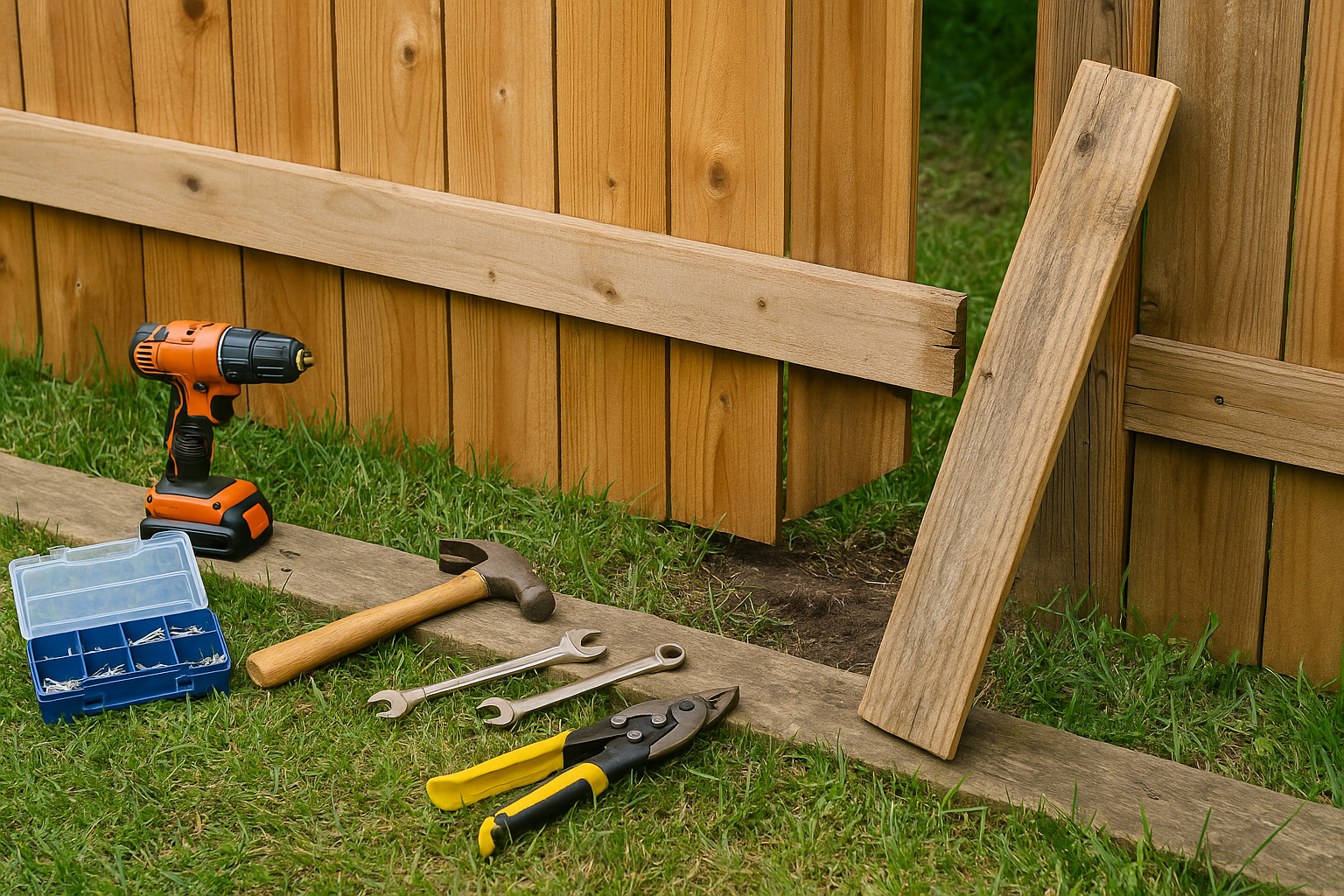
If you are doing your own residential fence repair, here is a quick look at what you should keep in the garage.
| The Tool | What It Does | Real-Talk Why You Need It |
|---|---|---|
| Digging Bar | Breaks up old concrete | Digging up a rotten post is miserable work. This heavy iron bar does the hard labor for you. |
| Makita Impact Driver | Drives thick screws | A standard drill will strip your screws. An impact driver powers through tough wood easily. |
| Simpson Strong-Tie Brackets | Secures loose rails | Sometimes you do not need a new post; you just need to reattach the rail firmly. |
To Dig or Not to Dig? Fixing the Dreaded Lean
Alright, let’s talk about the dreaded leaning post. This is the repair job everyone hates. You have a post that has snapped right at the ground level, and now a whole ten-foot section of your fence is threatening to crush your hydrangeas.
You have two choices here. You can dig out the old concrete footing, or you can try sistering the post.
Sistering is a classic handyman trick. Basically, you drive a heavy steel stake—or a smaller piece of pressure-treated lumber—deep into the ground right next to the broken post. Then, you bolt the two together using heavy-duty lag screws. It acts like a splint for a broken bone. It is a fantastic, cheap fence repair solution if the rest of the wood is still solid.
But sometimes, you just have to dig. You just have to.
When you do replace a post, make sure you use a plumb line. A plumb line is just a string with a weight on the end that ensures your post is standing perfectly straight. Because trust me, there is nothing worse than pouring fast-setting concrete, letting it dry, and then realizing your post is leaning three inches to the left.
And speaking of digging, a quick side note: if you are doing this in the middle of July, wear bug spray. The gnats will absolutely ruin your day while your hands are busy holding a shovel.
Replacing Pickets and Battling the Elements
Replacing individual pickets is much easier than messing with structural posts. However, it still requires a little finesse.
When you pop off a cracked picket, take a good look at the horizontal rail underneath. Is it spongy? If you press a screwdriver into the wood and it sinks right in, attaching a new picket is completely pointless. The nails will just slide out. You have to cut out the rotten section of the rail first.
When you install the new boards, leave a tiny gap between them. Do not jam them tight against each other. Remember how we talked about pine acting like a sponge? When it rains, those boards will swell up. If they do not have room to expand, they will push against each other and pop the nails straight out.
Also, skip the nails entirely if you can. Use exterior-grade deck screws. Screws hold the wood far better during our wild coastal thunderstorms. It is a simple upgrade that makes a massive difference in the lifespan of your repair.
Knowing When to Hold ‘Em and When to Fold ‘Em
Homeowners ask me this all the time: “Should I just fix these bad spots, or do I need to tear the whole thing down?”
The general rule of thumb is the twenty percent rule. If more than twenty percent of your fence is rotting, leaning, or falling apart, it is probably time for a total replacement. You will spend more money on constant patch jobs than you would on a brand-new installation.
But if you just have a few bad posts, some warped pickets, or a sagging gate? A solid repair will give that fence another five to ten years of life.
Taking care of small issues early stops them from spreading. Wood rot spreads. Termites spread. A leaning post puts extra weight on the posts next to it, pulling them down too. Fixing the small stuff today saves your wallet tomorrow.
Let’s Get That Yard Back in Shape
Fence maintenance is just part of living in our beautiful, humid, storm-prone coastal city. It takes a bit of elbow grease, a watchful eye, and sometimes a whole lot of patience to keep your property looking its best.
Maybe you started reading this and realized you simply do not have the time to wrestle with heavy bags of concrete. Or maybe you just do not want to spend your entire Saturday fighting off gnats while trying to pry rusty nails out of an old two-by-four. We completely understand.
That is exactly why Savannah Handyman is here. We handle the heavy lifting, the dirty digging, and the structural fixes so you can get back to enjoying your backyard in peace. We know the local weather, we know the soil, and we know exactly how to make your fence stand strong again.
Do not wait until a storm blows that leaning panel completely over. Give us a call today.